


Whether you’re brand-new to word searches or you already keep a puzzle book in your tote, this guide is your friendly, definitive primer. Below you’ll find clear answers to the most common questions people ask about word search books—from “are word search books good for your brain?” to “how do I choose the right one for me, my kids, or a grandparent?” We’ll also cover large-print word search books for adults and seniors, age-appropriate picks for kids (8–10), how to build a relaxing puzzle routine, and simple tips to get even more joy from every page.
As you read, you can dig deeper with related posts on this site, such as:
• Retro Word Search Book (’80s/’90s nostalgia): https://word-search-books.com/2025/02/13/retro-word-search-book/
• Cute Word Search Book (family-friendly, bedtime wind-down): https://word-search-books.com/2025/02/05/cute-word-search-book/
• World Word Search Book (for geography lovers): https://word-search-books.com/2025/02/06/world-word-search-book/
• How Word Search Puzzles Help Kids Learn (Focus, Vocabulary, Fun): https://word-search-books.com/2025/03/05/how-word-search-puzzles-help-kids-learn-focus-vocabulary-fun/
• Why Word Search Books Are the Perfect Screen-Free Escape: https://word-search-books.com/2025/03/06/why-word-search-books-are-the-perfect-screen-free-escape/
What Are Word Search Books?
Word search books are collections of themed letter grids. Your goal is to find and circle specific words hidden horizontally, vertically, diagonally, and sometimes backward. They differ from crosswords (which require filling in intersecting letter boxes with clue-based answers) or sudoku (numbers and logic). Word searches are low-pressure, screen-free brain games that balance just enough challenge with a soothing, rhythmic task: scan, find, circle, breathe.
What makes a great word search book?
- Thoughtful themes that match your interests (nature, travel, cozy nostalgia, faith & inspiration, animals, etc.).
- Clean, easy-to-read layouts with high contrast and generous spacing.
- Right-sized difficulty: enough “aha!” moments to feel satisfying, not stressful.
- Quality word lists: no sloppy repeats or oddities.
- Answer keys in the back, clearly formatted.
- Large-print options if you prefer bigger fonts and wider spacing.
If you want to see how theme changes the whole vibe, take a peek at our Retro, Cute, and World posts linked above.
Are Word Search Books Good for Your Brain?
Short answer: Yes—especially when you choose themes you care about and a format that’s comfortable for your eyes.
Here’s how word search puzzles can help:
- Attention & Focus: Scanning for letter patterns trains selective attention and visual discrimination.
- Working Memory: You hold a target pattern in mind as you sweep the grid and track what you’ve already checked.
- Language & Vocabulary: Themed lists (e.g., trees, cities, uplifting words) refresh vocabulary and spark recall.
- Stress Reduction & Mindfulness: The repetitive, goal-light nature encourages a calm, single-task state.
If you want to build a simple, science-informed evening routine, read Why Word Search Books Are the Perfect Screen-Free Escape next:
https://word-search-books.com/2025/03/06/why-word-search-books-are-the-perfect-screen-free-escape/
How to Choose the Right Word Search Book (For You or as a Gift)
Buying a word search book for adults can be as simple as picking a theme you love—or as strategic as evaluating layout, font, difficulty, and portability. Here’s a quick checklist to choose a book you’ll actually finish and enjoy:
1) Match the Theme to Your Mood or Hobby
Themes are the “secret sauce.” A Zen or Nature puzzle can feel like a deep breath after a long day; World scratches the wanderlust itch; Retro, Pop Culture, and Cute inject cozy nostalgia or feel-good vibes. The stronger the theme-fit, the more likely you are to keep turning pages.
2) Get the Print Size Right (Regular vs. Large Print)
If you ever squint at menus, go large print. Large-print word search books increase font size, line spacing, and grid spacing, which reduces eye strain—especially under evening light. (More on this in the dedicated section below.)
3) Check Difficulty & Word Count
- Relaxing mode: Fewer diagonals or backward words, moderate grid sizes, straightforward vocabulary.
- Challenge mode: Diagonals and backward words allowed; larger grids; niche or longer vocabulary.
- Volume/value: Many adult books feature 100+ puzzles or 5,000–8,000+ total words. Bigger isn’t always better, but it’s great if you’re building a daily habit.
4) Consider Portability & Trim Size
If you like puzzles on the go—commutes, waiting rooms, flights—choose a portable trim size (6 × 9 is my favorite) that slips into your bag and opens flat on a tray table. Our Cottage Word Search book is the perfect toss-in companion—compact, cozy, and ready to whisk you from city bustle to cabin-calm in minutes.
5) Interior Preview & Quality Signals
On Amazon product pages, use the “Look Inside” feature to preview:
- Font readability and high contrast.
- Grid clarity with clean lines and spacing.
- Theme alignment across puzzles.
- Answer keys: look for neat, easy-to-follow solutions.
6) Buying as a Gift? Think “Use Case”
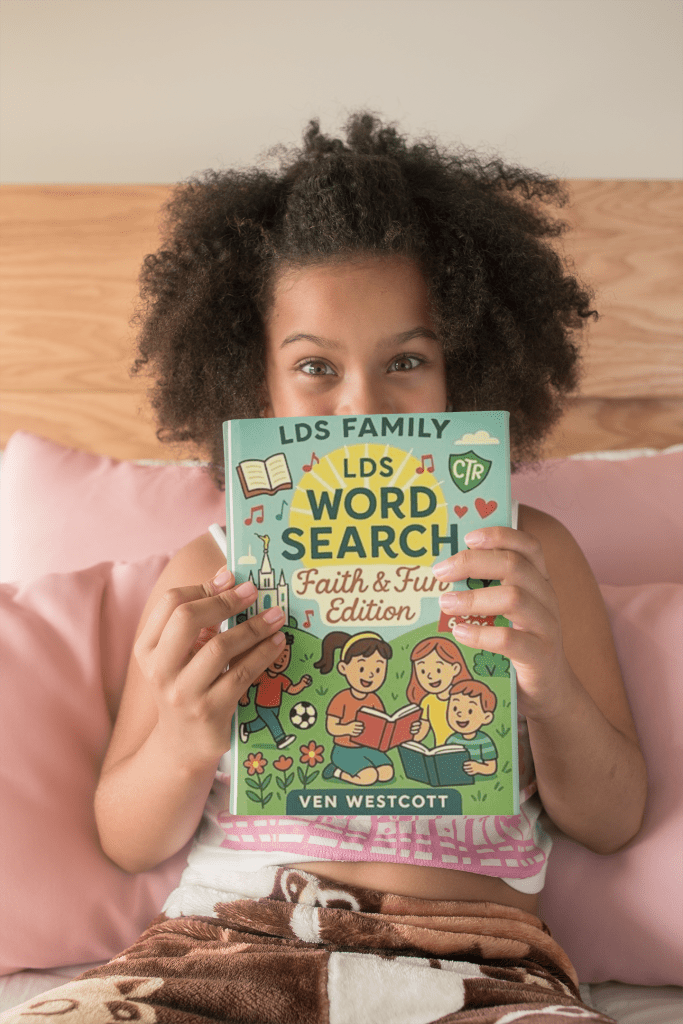
Use cases & richer picks
- Evening wind-down (calm, cozy): Angel Word Search, Positive Word Search, Floral Word Search, Butterfly Word Search, Mindful Word Search
- Travelers (planes, cruises, road trips): Airplane Word Search, Cruise Word Search, World Word Search, Canada Word Search, Maine Word Search, Cottage Word Search.
- Seniors (large print & high visibility): Relaxing Nature – Large Print, Large Print Spring, Large Print Fishing, States Word Search (easy-read layout), Pop Culture – Large Print.
- Teachers/Parents (by age & theme): Word Search for Kids 5–7, ABC Word Search, Word Search for Kids 10–12, Teen Word Search, Emoji Word Search, Bilingual Spanish Word Search, Sports Word Search, Princess Word Search.
- Hobbyists & niche fans: Wineries & Wines of California, Wine, Plant, Cats, Horses, Bowling, Pickleball, Art.
- Faith & culture: LDS Family, LDS Women’s, LDS Kids (8–12), Jewish Word Search, Angel Word Search.
- Mystery & classics: Sherlock Word Search, Shakespeare Word Search.
- Professions & service: Pharmacy Word Search, Firefighter Word Search, Army, Navy, President.
Word Search Books for Adults
Word search books for adults hit that sweet spot between “mentally engaging” and “stress-free.” You can tune your session to your energy level:
- After work: Choose calming themes (nature, cozy nostalgia, inspirational).
- Weekend coffee: Try world/geography or hobby niches for a little challenge.
- Couples time: Pick a theme you both enjoy and solve together—trade off searching or race to find words (winner gets bragging rights!).
A simple 10-minute routine
- Make a warm drink and dim harsh overhead lights.
- Set a 10-minute timer—the boundary helps you focus.
- Choose a soothing theme and an easy/medium puzzle.
- Breathe in as you scan across a row; breathe out as you scan down a column.
- Close with one gentle stretch—neck, shoulders, wrists.
Consistency builds the habit; the habit builds the benefits.
Large-Print Word Search Books for Adults & Seniors
If your eyes feel tired by evening—or you simply prefer bigger type—large-print word search books are a game-changer. They’re especially popular for seniors and anyone who experiences visual fatigue or glare sensitivity.
Why large print matters:
- Larger fonts reduce squinting and increase letter recognition speed.
- Generous spacing between letters and lines minimizes visual crowding.
- Higher contrast (dark letters on bright white or soft-white paper) helps in low-light rooms.
- Bigger page layouts give roomier grids and more comfortable marking.
How to pick a great large-print edition:
- Check font weight: Bold, sans-serif or clear slab-serif fonts are ideal.
- Preview grid spacing: Each letter should have clean breathing room around it.
- Look for “Large Print” callouts on the cover or description.
- Mind the content vibe: Large print doesn’t have to mean “plain.” Choose the same thoughtful themes you love—just in a more eye-friendly format.
If you’re shopping for gifts Grandma Word Search Book offers a family-friendly, gentle style, while Grandpa Word Search Book delivers cozy nostalgia—both in easy-to-read large print.
Word Search Books for Kids (Ages 8–10)
Parents and teachers often ask: “Are word search books good for kids?” Absolutely—when sized and themed appropriately. They’re a light, fun way to support vocabulary, spelling patterns, focus, and patience.
What to look for (Kids in general)
- Age-appropriate word lists: Shorter words, familiar categories (animals, foods, school, seasons).
- Clear, friendly fonts: Avoid fussy scripts.
- Gradual difficulty: Start with simpler grids; introduce diagonals/backward words later.
- Positive themes: Cute animals, nature, travel, sports, holidays.
- Answer keys: Confidence-builders for independent checking.
See How Word Search Puzzles Help Kids Learn (Focus, Vocabulary, Fun) for classroom tips and at-home routines.
Word Search Books for 8-Year-Olds
- Grid sizes: Smaller grids with mostly horizontal/vertical words.
- Vocab: Everyday words, sight-word-friendly sets, and fun categories (pets, snacks, playground).
- Wins early & often: Confidence matters more than challenge at this stage.
- Family tip: Turn it into “find-five-then-switch”—each person finds five words, pass the book, repeat.
Word Search Books for 10-Year-Olds
- Grid sizes: Moderate; introduce diagonals and occasional backward words.
- Vocab: Expand categories (geography, nature, sports, hobbies).
- Stamina: 10- to 15-minute sessions help kids practice sustained attention without screens.
- Teacher tip: Use themed puzzles to preview or review unit vocabulary; let early finishers grab a puzzle while peers wrap up.
Are Word Search Books Good for Travel and Waiting Rooms?
They’re perfect. Word search books are portable, battery-free, and Wi-Fi-free—a calm companion on planes, trains, ferries, and in waiting rooms. They help pass time without triggering the doom-scroll, and they work well when you might be interrupted (no plot to lose, no progress bar to manage).
Travel tips:
- Pick a trim size that fits your bag and opens flat on a tray.
- Keep a highlighter or gel pen clipped to the cover.
- Choose themes that fit the trip: world geography, outdoors, or cozy topics.
- Set micro-goals: “Two puzzles before boarding,” “One puzzle after takeoff,” etc.
How Are Word Search Books Made?
Behind the scenes, a lot of care goes into a polished book:
- Theme planning & curation — Selecting an overall theme (e.g., Nature, World, Cozy Nostalgia) and sub-themes for each puzzle page.
- Word list creation — Building clean lists (often 12–20 words per puzzle) that fit the theme, audience, and grid size.
- Grid generation — Placing words in the grid (horizontal/vertical/diagonal/backward) and filling the remaining cells with random letters.
- Quality checks — Verifying every target word appears; scanning for duplicates, typos, or unfortunate letter combinations; ensuring readable fonts and spacing.
- Answer keys — Creating clear solutions at the back.
- Print layout — Setting margins, page numbers, and trim size so the book is comfortable to hold and mark up.
That attention to detail is what separates a relaxing, “I’ll finish this” book from a frustrating one.
Accessibility & Readability: Eye-Friendly Design
If you experience visual fatigue, dyslexia, or glare sensitivity, look for:
- Large print with generous spacing and heavier font weight.
- High-contrast layouts (dark letters on light backgrounds).
- Clear word lists (no crammed columns).
- Avoid over-busy backgrounds that can interfere with letter recognition.
Lighting tip: Use a soft, warm task lamp at night. Cool, bluish light may feel bright but can be harsher on tired eyes and isn’t ideal before sleep.
Practical Tips to Get More from Your Puzzles
Turn any word search into the perfect match for your energy level.
To relax (downshift mode):
- Skip diagonals/backward words if the book allows flexibility.
- Use a soft highlighter—the smooth glide feels gentler than scratchy pen.
- Pair with calming themes and a warm drink.
To challenge yourself (focus mode):
- Set a 5–10 minute timer and try to beat your previous time.
- Search by letter patterns (e.g., double letters) to speed recognition.
- Alternate scan strategies: left-to-right sweeps, top-to-bottom, then diagonals.
Tools & habits:
- Pen vs. pencil vs. highlighter:
- Highlighter = easy visual tracking, low friction, relaxing.
- Gel pen = crisp lines, great for fast finders.
- Pencil = erasable if you like neat pages.
- Book care: Use a slim bookmark or sticky tab to track progress.
- Routine stacking: Pair puzzles with tea after dinner or with your morning sunlight break.
Stuck? Try this:
- Look for uncommon letters (Q, Z, X) first—they pop.
- Switch directions (scan columns if you’ve been scanning rows).
- Take a 30-second eye break: look across the room, then return.
Gifting Guide: Who Loves Word Search Books?
Seniors & grandparents: Choose large-print and soothing themes.
Busy professionals: Mindful, screen-free wind-down after work.
Travelers: World/geography themes for layovers and flights.
Teachers & homeschoolers: Age-graded kids’ books; themed sets for vocabulary units.
Pet lovers, gardeners, hobbyists: Niche theme = instant connection.
Attach a highlighter or gel pen with a ribbon for an easy, thoughtful gift bundle.
Common Myths (and Friendly Reality Checks)
“Word searches are only for kids.”
Not at all. Adults love them for mindful focus and gentle challenge—especially with well-curated themes.
“Large print is just for low vision.”
Large print is for anyone who wants less eye strain and more comfort—especially in evening light.
“Bigger books are always better.”
Volume is great if you’re building a habit, but quality of word lists and design matters just as much. Pick the theme and layout you’ll enjoy finishing.
Amazon Preview Tips (So You Pick a Winner)
When you’re on an Amazon product page, click “Look Inside.” In the preview:
- Scan the grids for spacing and letter clarity.
- Check font size/weight and contrast in the word list.
- Glance at multiple pages to confirm the theme is consistent.
- Skim the answer keys at the back—clean and legible?
If the preview makes you squint or the pages look cluttered, try a different edition or a large-print option.
FAQs
Are word search books good for the brain?
Yes. They support selective attention, visual scanning, working memory, and vocabulary refresh. Many readers also use them as a mindful, calming activity to reduce stress and transition away from screens in the evening. For a practical routine, see Why Word Search Books Are the Perfect Screen-Free Escape (linked above).
What’s the difference between regular and large-print word search books?
Large-print editions use bigger fonts and wider spacing in both word lists and grids, reducing eye strain and improving readability—especially helpful for adults and seniors or anyone who puzzles in the evening.
How many puzzles per day is ideal?
Think consistency over intensity. One puzzle a day is a great start; more if you’re enjoying the flow. For stress relief, aim for 10–15 minutes most evenings.
Are word searches helpful for kids?
Absolutely. Age-appropriate word searches help build vocabulary, spelling awareness, focus, and patience. Look for clear fonts, friendly themes, and gradual difficulty. For ages 8–10, choose grid sizes and word lengths that match their reading level. See How Word Search Puzzles Help Kids Learn (Focus, Vocabulary, Fun) for ideas.
Are word search books good for travel?
They’re ideal—portable, battery-free, and easy to pause and resume. Choose trim sizes that fit your bag and travel-friendly themes like world geography.
Can I use word searches for mindfulness or better sleep?
Yes. Keep it gentle (soothing themes, large print if needed), pair with warm light and a 10-minute timer, and avoid phones during your session. See Why Word Search Books Are the Perfect Screen-Free Escape for a simple routine.
What should I look for in a high-quality edition?
Clean, readable fonts; ample grid spacing; coherent themes; tidy answer keys; and, if needed, large print. Use Amazon’s preview to verify before you buy.
