

There’s a particular satisfaction that comes from spotting a “hidden” word and circling it in one smooth loop. If you’re the kind of person who burns through a word search on a lunch break or unwinds with a puzzle before bed, you’ve probably wondered: does being good at word searches say something about me—my brain, my personality, even my stress levels? Short answer: yes. Longer answer: let’s explore.
Below are six clear sections that tackle the most common questions around word search skill—what it signals, who tends to enjoy it, how it intersects with ADHD and anxiety, and even what the “30% rule” in ADHD means. Throughout, you’ll see carefully chosen examples from Ven Westcott’s catalog—each one included because it illustrates the point at hand, not because we’re stacking links. Think of the books as “proof points” for the ideas, not the other way around.
1) What does it mean if you’re good at word searches?
When someone is “good” at word searches, it usually signals strength in visual scanning, pattern recognition, and selective attention. You can sift through visual noise and quickly lock onto letter formations that match what you’re seeking. Underneath that is the ability to toggle between top-down intention (you know the word you’re hunting for) and bottom-up surprise (a letter cluster jumps out and you react). Your working memory is in motion too—you keep the target list online while your eyes sweep the grid and update the “found vs. not found” mental ledger. Finally, there’s pacing intelligence: you intuit when to slow down to reduce misses and when to speed up to keep momentum.
But there’s also a personality dimension. Many natural solvers like closed-loop challenges—tasks with a clear beginning and end, where progress is visible and satisfying. That preference often carries over into everyday life (hello, tidy inbox and satisfying grocery run). If that sounds like you, you might enjoy themes that respect your tempo:
- When you want steady, restorative focus, Relaxing Nature Word Search offers calming vocabulary and clean layouts that reward an unhurried scan.
👉 https://amzn.to/4ovgNJR - If you like your attention to ride on recognition and memory, Pop Culture Word Search makes solving feel social and sparkly—mini “oh, I know this!” hits as you go.
👉 https://amzn.to/3WCNitJ - On days when imagery and symbol keep your mind engaged, Witchy Word Search brings an intuitive, slightly mystical flavor to the same satisfying hunt.
👉 https://amzn.to/4hwY6DA - Prefer a brisker pace? A theme with stakes—like Shark Word Search—rewards quick eyes and fast decisions without adding pressure.
👉 https://amzn.to/4hqpe6R
The bigger takeaway: being good at word searches doesn’t just mean you’re fast—it often means you’re calmly effective at filtering noise, noticing patterns, and closing loops. That’s a powerful combo outside the puzzle, too.
2) Are people with ADHD good at word searches?
Often—especially when the puzzle hits a zone of interest or novelty. ADHD isn’t a lack of attention; it’s a regulation challenge. Many people with ADHD experience hyperfocus when an activity is meaningful, gamified, or freshly novel. Word searches, done right, are a dopamine-friendly design: short feedback loops (every found word is a micro-reward), low setup cost (open the book—go), and visible progress (lists shrink; pages turn).
Three levers tend to help:
- Novelty: rotating themes fights boredom before it starts.
- Clarity: bold fonts, uncluttered grids, and consistent direction rules reduce friction.
- Micro-goals: “find three words,” “scan only diagonals for one minute,” “two-minute sprint, one-minute rest.”
To keep interest hot, try identity-driven or high-energy topics:
- Firefighter Word Search has a mission-forward vibe that pairs nicely with quick, purposeful scanning.
👉 https://amzn.to/4huQLUX - Navy Word Search appeals to detail-oriented solvers who like gear, operations, and history with crisp terminology.
👉 https://amzn.to/4qr6IzA - Sports Word Search channels competitive energy into a satisfying hunt—team names, stats, and familiar lingo make for fast “clicks.”
👉 https://amzn.to/3Lqp03K - For modern, social momentum, Pickleball Word Search is snackable and upbeat, perfect for quick sprints.
👉 https://amzn.to/4njX6Ug - And if novelty-through-geography keeps your brain curious, World Word Search Book offers an ever-refreshing rotation of topics so you rarely stall.
👉 https://amzn.to/473Pe4E
Pharmacy Word Search is outstanding for someone studying to become a pharmacist (terminology turns into “aha” cues).
👉 https://amzn.to/47p4Xdm
A tiny practice that makes a big difference: end on a win. When you stop right after finding a word, your brain tags the session as rewarding and under your control—fuel for the next sit-down.
3) What type of people like word searches?
There isn’t one type; there are clusters—and they often overlap. Here are a few you might recognize:
The Structured-Serenity Solver
You want relaxation with purpose. Clean grids, soothing themes, and predictable wins help your nervous system downshift without getting bored.
- Cozy Cottage Word Search is a gentle, homey reset—perfect for late evenings and slow weekends.
👉 https://amzn.to/48GbBOR - Animal people often love a quiet, friendly hunt through Cats Word Search—lighthearted vocabulary; low-stress solving.
👉 https://amzn.to/4hA2aCT
The Nostalgia & Novelty Fan
You’re motivated by recognition and delight—retro culture, classic films, playful visual cues.

- Retro Word Search offers rhythm and warmth; scanning feels like flipping through old mixtapes.
👉 https://amzn.to/3L2zYfQ - Guess the Movie Word Search blends recognition and recall in a way that keeps your eyes darting.
👉 https://amzn.to/3JoRBpD - Emoji Word Search is contemporary, visual, and quick to “click”—perfect for mood-lightening micro-sessions.
👉 https://amzn.to/3WlYI56

The Explorer
Curiosity is your compass—maps, skies, and far-off places keep attention buzzing.
- States Word Search scratches the geo-trivia itch without feeling academic.
👉 https://amzn.to/4oFBjI6 - Space Word Search adds awe to the hunt—missions, constellations, famous telescopes.
👉 https://amzn.to/4oz939L - Maine Word Search is a lovely example of “go deep on one place”—regional flavor that’s quietly immersive.
👉 https://amzn.to/42UR9Ga
The Aesthete
You’re drawn to symbolism and beauty—puzzles feel better when the theme carries meaning.
- Butterfly Word Search brings a gentle transformation motif that pairs well with reflective evenings.
👉 https://amzn.to/47snCVL - Jewish Word Search invites cultural depth and memory into the grid—rich themes, respectful presentation.
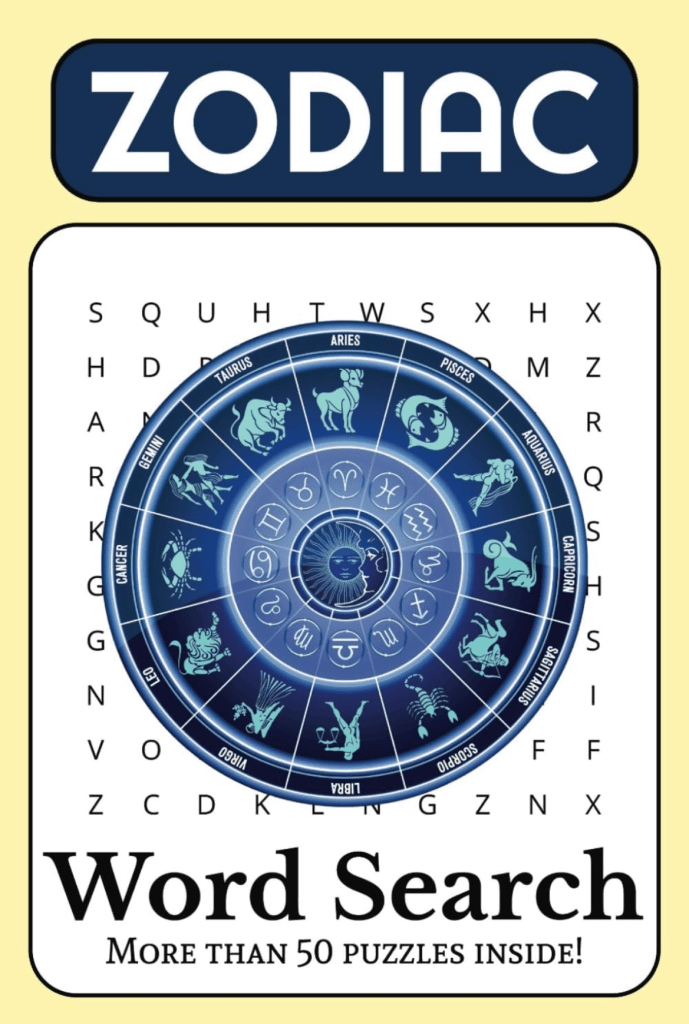
👉 https://amzn.to/477skcB - Zodiac Word Search taps archetypes and story—perfect for solvers who like a little myth with their mastery.
👉 https://amzn.to/4hqTcYB
The Connector (Family & Friends)
You enjoy puzzles as low-pressure face-to-face time. It’s about conversation as much as completion.
- Large Print Spring Word Search is easy to see at a shared table and seasonally joyful.
👉 https://amzn.to/4nRgKbo - Grandma Word Search (Large Print) brings a sweet, celebratory tone to family solving—nostalgia meets accessibility.
👉 https://amzn.to/4hpFxRz
If you see yourself in multiple clusters, that’s normal. Personality is context-dependent; your best fit this week might not be your best fit next week. That’s the beauty of a bookshelf with varied themes.

4) Are word searches good for anxiety?
They can be—especially when used intentionally. Word searches provide several anxiety-buffering ingredients:
- Cognitive grounding. Anxiety tends to future-cast. A letter grid pulls attention back to right now.
- Predictable rules and wins. Uncertainty drops; control rises. There’s a list, a grid, and a solution.
- Embodied focus. The simple motor pattern—look, find, circle—gives your hands a job and your nervous system a steady beat.
- Breath pairing. Scan a row on a slow inhale; circle a word on a gentle exhale. The puzzle becomes a metronome for your breath.
- Mood-congruent vocabulary. Words about nature, gratitude, or comfort subtly nudge affect upward while you solve.
If your goal is to soften jagged edges, pick themes that signal safety and ease:
- Positive Word Search folds gratitude and optimism into the hunt—great when you want the puzzle to lift your day as it focuses your mind.
👉 https://amzn.to/4ql1Iwd - Cottage Word Search (distinct from Cozy Cottage) is slow, cozy, and low-stakes—perfect when you need “soft edges” on everything.
👉 https://amzn.to/3L3Z4Li - Anxiety Word Search meets tough days head-on with calming, reassuring language; many readers pair it with tea and a 10-minute timer.
👉 https://amzn.to/43A0HXg - If you relax best with variety, novelty can interrupt worry loops. Everything Word Search lets you “channel surf” topics without leaving the page.
👉 https://amzn.to/4qpEvJl - Want to anchor your calm with a quick reflection? The Word Search Journal blends short puzzles with gentle prompts—an easy nightly ritual.
👉 https://amzn.to/4776d69
Micro-practice to try tonight: set a 7–10 minute timer, find three words (circle each on an exhale), then stop. Ending on purpose trains your brain to associate puzzles with safety and completion.
5) What is the 30% rule in ADHD?
The “30% rule” is a practical shorthand often used by clinicians and coaches to describe how executive function (planning, working memory, initiation, self-monitoring) may lag roughly 30% behind a person’s chronological age in ADHD. It isn’t a judgment; it’s a way to set compassionate expectations and right-size tasks.
Why it matters here:
- Right-sized demands reduce friction. If a 30-year-old with ADHD is expected to manage executive tasks like a neurotypical 30-year-old, both parties get frustrated. Calibrating to an “executive age” ~30% lower helps you design tasks with better guardrails: clear steps, shorter durations, more frequent wins.
- Success begets momentum. Word searches are ideal because you can adjust duration, difficulty, and theme on the fly. Segment tasks (“one diagonal-only pass,” “five-word sprint”) so motivation stays protected.
Use the 30% lens to pick compelling, readable themes—not too easy, not punishing:
- Firefighter Word Search is excellent for two-minute sprints—the urgency flavor pairs well with deliberate bursts.
👉 https://amzn.to/4huQLUX - World Word Search Book keeps curiosity driving attention; fresh topics minimize the “drift.”
👉 https://amzn.to/473Pe4E - Bilingual Spanish–English Word Search adds gentle learning novelty to the same soothing structure—great for micro-goal streaks.
👉 https://amzn.to/3Lb4mEG - Working with a younger solver? Small 3-Letter Words gives right-sized wins without strain.
👉 https://amzn.to/4o5X4k7 - And for those actively studying pharmacy (students only), Pharmacy Word Search turns dense terminology into a rewarding recognition game.
👉 https://amzn.to/47p4Xdm
Remember: the 30% rule is a calibration tool, not a ceiling. Time in the “sweet spot”—right challenge, right time—builds stamina and skill.
6) What kind of personality likes word searches?
Plenty—because word searches are flexible enough to meet different minds where they are.
- The Organizer: You love checklists and clear finishes. You’ll thrive on themes that feel like “tidy progress” (see Positive Word Search above).
- The Explorer: New places fuel your attention. You’ll bounce happily between States, Space, and World.
- The Specialist: Precision is your playground—try Navy (general audience) or Pharmacy (students).
- The Romantic/Seasonalist: Rituals, holidays, and vibes matter—save Large Print Spring for a gentle seasonal reset with family.
- The Aesthete: You prefer symbolism and story—Butterfly, Zodiac, Witchy will feel like a fit.
- The Connector: Group-friendly picks like Grandma (Large Print) make it easy to solve and chat without squinting.
- The Curiosity Maximalist: You want a little bit of everything—Everything Word Search is your buffet.
In practice, most of us shift among these modes throughout the week—which is why a varied shelf of themes keeps your puzzle habit fresh and self-kind.

Putting It All Together (and Picking Your Next Book)
If you’re good at word searches, you likely have a keen visual radar, a nimble attention system, and a preference for structured, finishable challenges. Those strengths don’t just make you a better solver—they carry into everyday life: noticing details others miss, moving calmly through clutter, and closing loops that build confidence.
To keep those strengths sharp (and your enjoyment high), match your book to your moment:
- Need calm? Relaxing Nature Word Search → https://amzn.to/4ovgNJR
- Need a lift? Positive Word Search → https://amzn.to/4ql1Iwd
- Need recognition energy? Pop Culture Word Search → https://amzn.to/3WCNitJ
- Need a cozy exhale? Cozy Cottage Word Search → https://amzn.to/48GbBOR
- Need novelty? World Word Search Book → https://amzn.to/473Pe4E
- Sprint mood? Firefighter Word Search → https://amzn.to/4huQLUX
- Symbolic/reflective? Butterfly Word Search → https://amzn.to/47snCVL
- Family table? Large Print Spring Word Search → https://amzn.to/4nRgKbo or Grandma Word Search (Large Print) → https://amzn.to/4hpFxRz
Pro tip: keep two or three books open at once. When your energy shifts, so does the best theme for it. And always end on a win—leave your future self a positive trail back.
Explore More
Ready to pick the perfect theme for your next 10 minutes? Start here:
- Home — Word-Search-Books.com: browse themes, large-print options, and giftable picks.
https://word-search-books.com/ Word Search Books
And if you want more guidance and ideas, readers also enjoy:
- Everything You Ever Wanted to Know About Word Search Books (But Didn’t Know Who to Ask) — a comprehensive guide to benefits, formats, and choosing for different ages.
https://word-search-books.com/2025/10/13/everything-you-ever-wanted-to-know-about-word-search-books-but-didnt-know-who-to-ask/ Word Search Books - Large-Print Word Search for Seniors: The 2025 Buyer’s Guide (Comfort • Clarity • Confidence) — how to spot truly readable layouts and avoid eye strain.
https://word-search-books.com/2025/10/15/large-print-word-search-for-seniors-the-2025-buyers-guide-comfort-clarity-confidence/ Word Search Books - How Word Search Puzzles Help Kids Learn (Focus, Vocabulary, Fun) — tips for choosing age-appropriate themes and building a simple study routine.
https://word-search-books.com/2025/03/05/how-word-search-puzzles-help-kids-learn-focus-vocabulary-fun/ Word Search Books
If you’re ready to match your mood to the perfect puzzle, pick a theme above and let your eyes do what they do best—scan, find, circle, breathe.
